
How Can an Electronic Shaft Rotogravure Printing Machine Improve Printing Accuracy and Flexible Packaging Efficiency
Green Ohm develops the Electronic Shaft Rotogravure Printing Machine for manufacturers seeking precise multi-color printing on flexible packaging materials. With servo-driven control, coordinated tension management, and accurate color registration, this equipment supports consistent print quality and efficient roll-to-roll production.
An electronic shaft rotogravure printing machine is designed to deliver accurate, repeatable multi-color printing on plastic films, paper, and other compatible roll materials. By coordinating drive systems electronically instead of relying solely on traditional mechanical shaft connections, it helps operators manage web movement and color registration throughout the printing process. This article explains how the technology works, its principal components, compatible substrates, key specifications, and practical considerations for equipment selection. It also examines how Green Ohm's machine configuration can support flexible packaging production and what buyers should evaluate before investing in a new printing line.
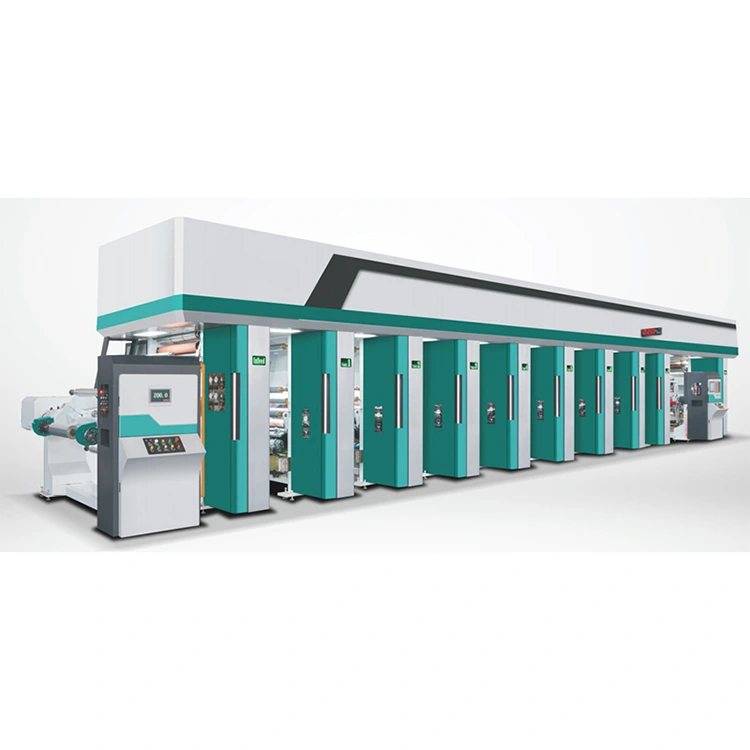
Table of Contents
- What Is an Electronic Shaft Rotogravure Printing Machine?
- How Does Electronic Shaft Technology Work?
- Which Features Influence Printing Performance?
- What Materials Can the Machine Print?
- What Are the Main Technical Specifications?
- Where Is This Printing Equipment Used?
- How Should Buyers Select the Right Machine?
- How Can Operators Maintain Consistent Performance?
- Frequently Asked Questions
- Conclusion
1. What Is an Electronic Shaft Rotogravure Printing Machine?
An electronic shaft rotogravure printing machine is an industrial printing system that uses electronically coordinated drives to control the movement of multiple printing units. It combines the established gravure printing process with modern servo and automation technologies to support precise multi-color printing on continuous rolls of material.
In conventional gravure printing, engraved cylinders transfer ink onto a substrate as it passes through successive printing stations. Each cylinder represents a specific color or part of the image. Accurate synchronization between these stations is essential because even a small deviation in web movement can cause visible color misalignment.
Electronic shaft control coordinates the relevant drive axes through a control system, helping maintain their required speed and positional relationships. This approach can simplify synchronization and adjustment when compared with mechanically linked arrangements, depending on the machine configuration.
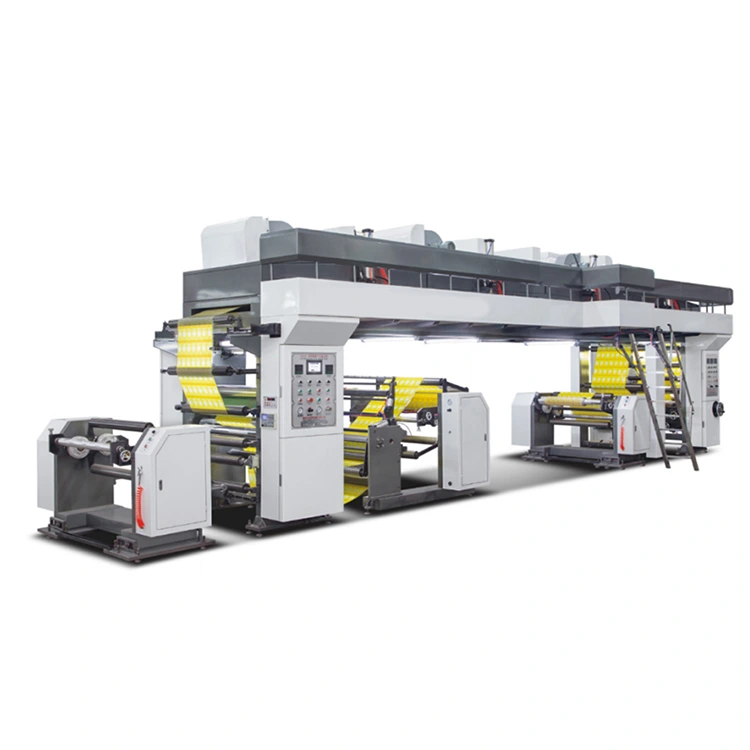
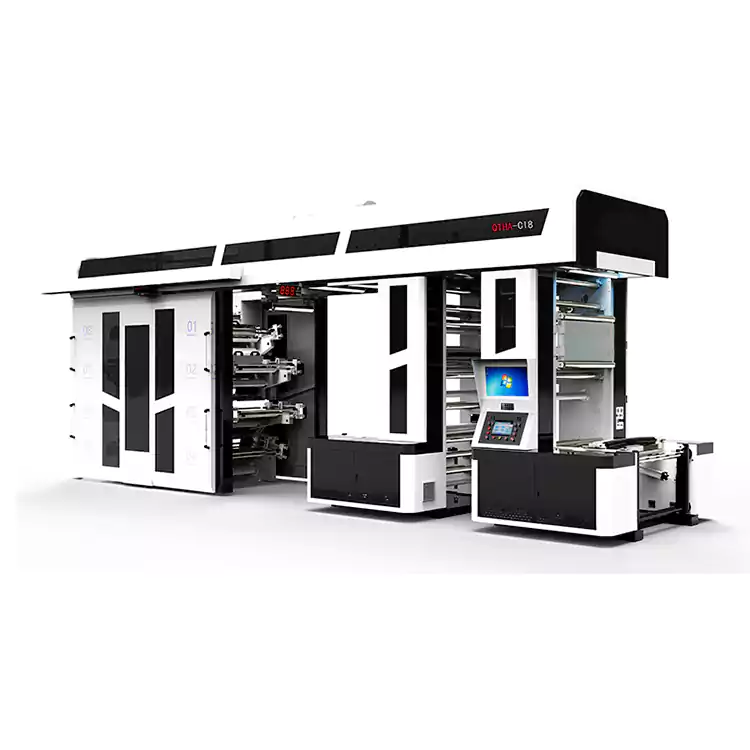
Green Ohm offers an electronic shaft gravure printing solution intended for multi-color printing on plastic films, paper, and other compatible roll materials. Its configuration combines servo-driven printing, computerized registration, and tension control to address the practical demands of flexible packaging production.
2. How Does Electronic Shaft Technology Work?
The printing process begins when the unwinding unit feeds a roll of substrate into the machine. The web travels through the printing stations, where engraved cylinders transfer ink onto the material. After each printing stage, the substrate passes through a drying section before proceeding to the next station or the rewinding unit.
Electronic coordination supports this process by synchronizing the drives responsible for moving the material and operating the printing cylinders. A programmable logic controller (PLC), servo-driven tension control, and registration adjustments work together to help maintain stable production conditions.
- Unwinding: The roll is mounted and the substrate is fed into the machine under controlled tension.
- Web guidance: The material follows its intended path through the printing line, helping maintain consistent positioning.
- Ink transfer: Engraved printing cylinders transfer the required ink patterns to the substrate.
- Color registration: Registration controls coordinate the positions of successive color impressions.
- Drying: The drying system removes the required amount of solvent or moisture, depending on the ink system and operating conditions.
- Rewinding: The printed material is collected into a roll for subsequent inspection, lamination, slitting, or converting.
Actual print quality depends on more than electronic synchronization alone. Cylinder condition, substrate properties, ink formulation, drying conditions, machine setup, and operator procedures all influence the finished result.
3. Which Features Influence Printing Performance?
Servo-Driven Printing Control
Servo drives enable coordinated control of printing axes and support accurate speed and position management. When correctly configured, they can help reduce registration deviations and make setup adjustments more manageable during multi-color production.
Closed-Loop Tension Management
Flexible films and thin paper can stretch, wrinkle, or shift when web tension is unstable. Green Ohm's described configuration uses three-motor closed-loop tension control to coordinate material handling. Appropriate tension settings are essential for reducing web movement and maintaining consistent print dimensions.
Computerized Color Registration
Horizontal and vertical registration adjustments help align individual color impressions. Pre-registration functions can also support setup before full production begins. These capabilities are particularly useful for detailed graphics, fine text, and packaging designs that require accurate color-to-color alignment.
Ink Supply and Doctor Blade Assembly
The ink transfer roller supplies ink to the printing process, while the doctor blade removes excess ink from the cylinder surface. Green Ohm describes an independently driven doctor blade arrangement designed to facilitate adjustment and blade changes. Proper blade condition and ink management help support clean image reproduction.
Integrated Drying and Safety Controls
The drying system uses controlled airflow and temperature management to support ink drying. Touchscreen monitoring and fault-diagnosis functions can help operators observe operating conditions and identify problems. Appropriate ventilation, solvent handling, and machine safety measures remain essential when printing with solvent-based inks.
- Electronically coordinated printing drives.
- Closed-loop tension management for web stability.
- Horizontal and vertical color registration adjustments.
- Ink transfer and doctor blade systems designed for controlled ink application.
- Drying, monitoring, and machine fault-diagnosis functions.
4. What Materials Can the Machine Print?
Substrate compatibility is a key factor when selecting a rotogravure printing machine. Different materials have different tensile properties, surface characteristics, thicknesses, and ink adhesion requirements. The correct combination of substrate, cylinder engraving, ink, and drying conditions is necessary for reliable results.
Green Ohm lists the following material ranges for its electronic shaft configuration:
| Substrate | Listed Thickness or Basis Weight | Typical Considerations |
|---|---|---|
| Polyester film (PET) | 12–60 μm | Dimensional stability, ink adhesion, and drying conditions. |
| Nylon film | 15–60 μm | Web tension, moisture sensitivity, and surface treatment. |
| Polyethylene (PE) | 40–75 μm | Film stretch, surface energy, and ink compatibility. |
| OPP, BOPP, and CPP films | 15–60 μm | Surface treatment, print adhesion, and film handling. |
| Polyvinyl chloride (PVC) | 25–65 μm | Material grade, dimensional stability, and ink suitability. |
| Cellophane | 20–30 μm | Moisture sensitivity and careful tension adjustment. |
| Paper | 30–80 g/m² | Porosity, absorbency, and web strength. |
These ranges are the manufacturer's listed material parameters, not a guarantee that every grade can run under identical conditions. Buyers should confirm the intended substrate, ink system, thickness, and production requirements before ordering.
5. What Are the Main Technical Specifications?
The following table summarizes the principal specifications published for Green Ohm's YG-8 series electronic shaft rotogravure printing machine. Values should be confirmed against the current quotation and final technical agreement before purchase.
| Specification | YG-8-850 | YG-8-1050 | YG-8-1250 |
|---|---|---|---|
| Maximum web width | 850 mm | 1,050 mm | 1,250 mm |
| Maximum mechanical speed | 420 m/min* | 420 m/min* | 420 m/min* |
| Maximum printing speed | 400 m/min* | 400 m/min* | 400 m/min* |
| Unwinding/rewinding roll diameter | 600–800 mm | 600–800 mm | 600–800 mm |
| Substrate core inner diameter | 76 mm | 76 mm | 76 mm |
| Printing cylinder diameter | 120–300 mm | 120–300 mm | 120–300 mm |
| Registration accuracy | ±0.1 mm | ±0.1 mm | ±0.1 mm |
| Drying oven heating power | 30 kW | 30 kW | 32 kW |
| Total installed power | 288 kW | 288 kW | 295 kW |
*The manufacturer's published specification uses the unit mm/min for the maximum mechanical and printing speeds. The values above are expressed as m/min only as a provisional interpretation of the listed figures. Confirm the correct units and rated operating speeds directly with Green Ohm before using these figures for production planning.
The 850 mm model may suit narrower web requirements, while the 1,050 mm and 1,250 mm models provide wider substrate capacity. The appropriate model depends on finished package dimensions, material utilization, printing layout, cylinder specifications, and planned output rather than web width alone.
6. Where Is This Printing Equipment Used?
Electronic shaft gravure printing is relevant to manufacturers that need repeatable graphics across long production runs. Its suitability depends on the packaging design, required print quality, substrate, ink system, and downstream converting process.
Flexible Food Packaging
Printed films used for snack bags, confectionery wrappers, dry food packaging, and other flexible packs often require consistent color reproduction and clear graphics. The finished packaging structure must also meet the applicable food-contact and packaging requirements.
Consumer Goods Packaging
Detergent refill packs, personal care packaging, and household product pouches may use multi-color printed films to communicate branding, product information, and usage instructions.
Paper-Based Packaging
Where the paper grade and ink system are compatible, gravure printing can support decorative designs, repeat patterns, and printed packaging materials that need consistent image reproduction.
Industrial Flexible Materials
Some industrial packaging applications use printed films for identification, product information, or visual differentiation. Buyers should assess chemical resistance, substrate performance, and end-use requirements before selecting the printing process.
For packaging that will later undergo lamination, slitting, or bag making, print quality should be evaluated together with the performance of the entire converting line.
7. How Should Buyers Select the Right Machine?
Choosing a printing machine involves more than comparing maximum speed or purchase price. Production teams should match the equipment to their actual jobs, expected utilization, operating environment, and maintenance capabilities.
- Confirm the substrate range. Identify film types, thicknesses, paper grades, surface treatments, and any material changes expected in the future.
- Define the required web width. Calculate usable printing width, edge margins, and material utilization for the packaging layouts you produce.
- Specify the color and registration requirements. Confirm the number of colors, image complexity, registration tolerance, and inspection method.
- Evaluate realistic production speed. Ask for expected running speeds with your substrate, ink, cylinder repeat, and drying conditions rather than relying solely on maximum mechanical speed.
- Review the control system. Clarify servo configuration, registration adjustment, tension-control behavior, operator interface, alarms, and troubleshooting support.
- Check utilities and installation needs. Assess electrical capacity, ventilation, drying energy, floor space, exhaust requirements, and applicable safety regulations.
- Plan service and training. Confirm installation assistance, operator training, spare parts, preventive maintenance, and after-sales response arrangements.
Before placing an order, request a detailed technical proposal and, where possible, arrange a sample trial using representative materials and artwork. This helps verify that the proposed configuration is suitable for the actual production environment.
8. How Can Operators Maintain Consistent Performance?
Routine maintenance helps reduce unplanned downtime and protects print consistency. A practical maintenance program should follow the manufacturer's operating manual and account for production intensity, ink chemistry, substrate type, and environmental conditions.
- Inspect printing cylinders: Check for damage, contamination, wear, and issues that may affect image transfer.
- Maintain doctor blades: Inspect blade edges, mounting, contact conditions, and replacement intervals.
- Verify tension settings: Review unwinding, interstation, and rewinding tension when changing material or job specifications.
- Monitor registration: Check alignment during startup, after material changes, and throughout production.
- Clean ink-handling components: Follow approved procedures for ink circulation, residue removal, and solvent handling.
- Check the drying system: Monitor airflow, temperature controls, ventilation, and safety interlocks.
- Inspect drives and controls: Follow the recommended inspection schedule for servo systems, sensors, PLC components, and electrical connections.
- Record operating data: Document recurring defects, downtime, waste, and adjustments to support continuous improvement.
When using solvent-based inks, operators must follow the machine manufacturer's instructions and applicable fire, ventilation, emissions, and occupational safety requirements. Maintenance should only be performed by appropriately trained personnel with the equipment placed in a safe condition.
9. Frequently Asked Questions
Q1: What is the main advantage of an electronic shaft rotogravure printing machine?
Its principal advantage is electronically coordinated drive control, which supports synchronized printing units and accurate color registration. Combined with suitable tension management and correct setup, this can help improve consistency and simplify adjustments in multi-color roll-to-roll production.
Q2: Which materials are compatible with Green Ohm's machine?
The listed materials include PET, nylon, PE, OPP, BOPP, CPP, PVC, cellophane, and paper within specified thickness or basis-weight ranges. Actual compatibility depends on the material grade, ink system, surface treatment, and machine configuration. Confirm the requirements for your intended substrate before purchasing.
Q3: What is the maximum printing speed of the YG-8 series?
The product page lists a maximum mechanical speed of 420 and a maximum printing speed of 400, but the published unit is inconsistent with typical industrial line-speed notation. Buyers should obtain written confirmation of the correct units, rated conditions, and expected production speed from Green Ohm.
Q4: How do I choose between the YG-8-850, YG-8-1050, and YG-8-1250?
The main listed difference is maximum web width: 850 mm, 1,050 mm, and 1,250 mm, respectively. Select the model according to packaging dimensions, job layout, substrate utilization, and production plans. Also verify floor-space requirements, power supply, and installation conditions.
Q5: What should I prepare before requesting a quotation?
Prepare the substrate type and thickness, web width, number of printing colors, artwork or sample, cylinder repeat requirements, target output, ink system, and expected downstream processes. These details help the manufacturer assess the required configuration and identify technical questions before a quotation is finalized.
10. Conclusion
An electronic shaft rotogravure printing machine can be a valuable investment for flexible packaging manufacturers that require coordinated multi-color printing, controlled web tension, and repeatable registration. The best results come from matching the machine configuration to the substrate, artwork, ink system, drying requirements, and actual production targets. Green Ohm's YG-8 series offers three listed web-width options, together with servo-driven printing control, computerized registration, and integrated material-handling functions. Before making a final decision, confirm the technical specifications, production speed units, sample-printing results, installation requirements, and after-sales support with the manufacturer. To discuss your substrate requirements, compare available configurations, or request a tailored quotation, contact us through the Green Ohm Electronic Shaft Rotogravure Printing Machine product page.
Related News
- How Can a Microcomputer Controlled Flat Lift Screen Printing Machine Improve Printing Accuracy and Production Efficiency
- How Can an Eco-Friendly Solvent Less Lamination Machine Transform Flexible Packaging Production
- How Can a Microcomputer Controlled Flat Lift Screen Printing Machine Improve Modern Industrial Printing Efficiency
- How Can a Microcomputer Controlled Swing Arm Screen Printing Machine Improve Modern Printing Efficiency
- How Can a Microcomputer Controlled Flat Lift Screen Printing Machine Transform Modern Industrial Printing Efficiency
- How Does Solvent-base Lamination Improve Flexible Packaging Quality?
Leave me a message