
How Can a Fully Automatic Carton Screen Printing Machine Improve Packaging Quality and Production Efficiency
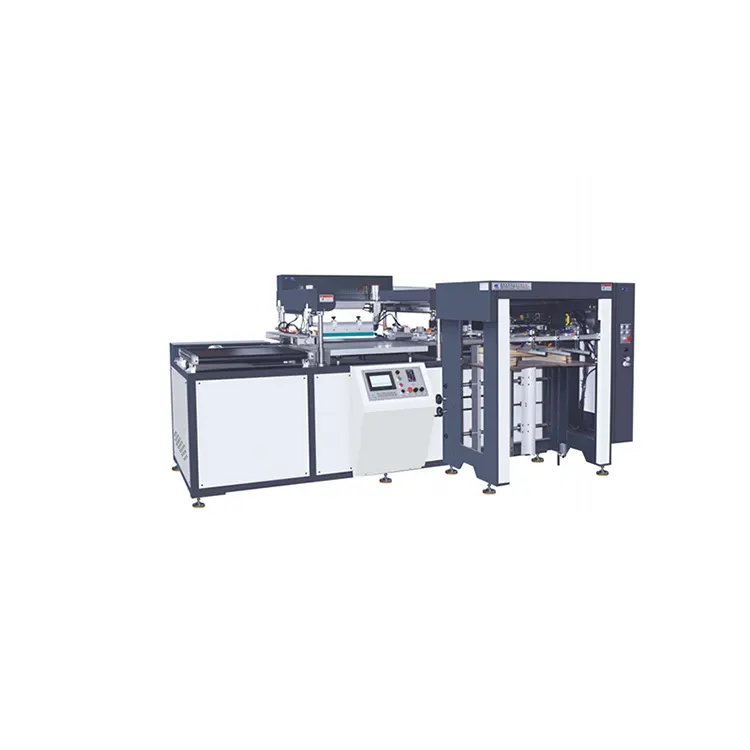
For packaging manufacturers seeking consistent print quality, higher output, and reduced manual handling, Green Ohm offers the Fully Automatic Carton Screen Printing Machine as a practical solution for modern packaging production. Designed to integrate automatic feeding, screen printing, and material delivery, this equipment helps businesses streamline printing operations while maintaining clear patterns, uniform ink coverage, and accurate positioning on corrugated cartons and other suitable flat materials.
A fully automatic carton screen printing machine helps packaging producers improve workflow efficiency, maintain repeatable print results, and reduce labor-intensive handling. With PLC control, servo-driven movement, adjustable printing pressure, and automatic material feeding and delivery, the Green Ohm BS-ZP1500E is designed for printing applications involving corrugated cardboard, hollow boards, and wooden packaging. This guide explains its operating principles, main features, technical specifications, application scenarios, and the factors buyers should evaluate before selecting an industrial screen printing system.
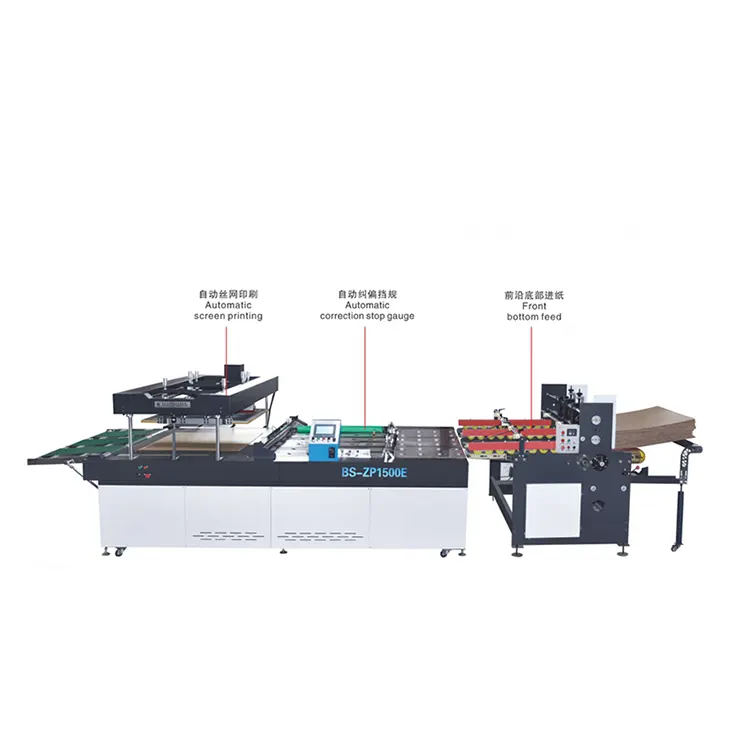
Table of Contents
- What Is a Fully Automatic Carton Screen Printing Machine?
- Why Does Automation Matter in Carton Printing?
- What Are the Key Features of the Green Ohm Machine?
- Technical Specifications of the BS-ZP1500E
- Which Materials and Applications Are Suitable?
- How Should Buyers Choose the Right Machine?
- How Can Manufacturers Maintain Consistent Printing Performance?
- Frequently Asked Questions
- Conclusion: Building a More Efficient Carton Printing Workflow
1. What Is a Fully Automatic Carton Screen Printing Machine?
A fully automatic carton screen printing machine is an industrial printing system that automates key stages of the screen printing process, from feeding and positioning materials to printing and discharging finished sheets. Instead of requiring operators to manually load and remove every workpiece, the equipment coordinates material movement and printing operations through an integrated control system.
Screen printing transfers ink through a prepared mesh screen onto a substrate. A squeegee pushes the ink through the open areas of the screen, creating the intended image, text, logo, or graphic. The method is particularly useful when packaging requires visible branding, product identification, decorative graphics, or selected surface treatments.
Green Ohm's BS-ZP1500E Fully Automatic Carton Screen Printing Machine is designed around automatic paper feeding, printing, and bridge-style paper output. It can also be integrated with compatible drying equipment and an automatic paper delivery machine, subject to the production line configuration.
For manufacturers handling repeated packaging orders, this integrated workflow can reduce unnecessary material transfers and make production scheduling more manageable.
2. Why Does Automation Matter in Carton Printing?
Packaging production often involves large batches, recurring artwork, tight delivery schedules, and demanding appearance standards. Manual printing processes may require substantial operator involvement and can introduce variations in positioning, handling, and production rhythm.
Automated printing equipment addresses these challenges by coordinating material feeding, positioning, printing movement, and output. Its value extends beyond printing speed alone.
Higher production efficiency
Automatic feeding and discharge reduce the need for repetitive manual loading and unloading. Operators can focus more attention on quality checks, ink preparation, job changeovers, and production monitoring. Green Ohm lists a maximum printing speed of up to 1,500 prints per hour for the BS-ZP1500E, although actual throughput depends on material characteristics, print coverage, setup, and operating conditions.
More consistent print positioning
Servo-driven movement and adjustable screen alignment help control material positioning during printing. Stable positioning is important when graphics must appear consistently across a batch of cartons or packaging boards.
Reduced manual handling
Moving sheets repeatedly between separate processing stations can consume time and increase the risk of bending, scuffing, or misalignment. An automated workflow can reduce these handling steps when feeding, printing, and downstream equipment are properly coordinated.
Better control over operating costs
Automation may lower labor requirements per printed unit and improve equipment utilization. However, the actual return on investment depends on order volume, staffing costs, ink consumption, maintenance, downtime, and the percentage of available machine time spent producing saleable output.
3. What Are the Key Features of the Green Ohm Machine?
The BS-ZP1500E combines mechanical movement, electronic control, pneumatic functions, and material transport to support repeatable screen printing on suitable packaging substrates.
PLC control and a human-machine interface
The machine uses a programmable logic controller (PLC) and a human-machine interface for operating the production sequence. This arrangement allows operators to manage machine functions through a centralized interface rather than coordinating every movement manually.
For production teams, an organized control system can simplify routine operation and make it easier to establish consistent procedures for repeat orders.
Servo-driven printing and feeding
Servo motors control key machine movements, including the printing stroke and conveyor positioning. Combined with a planetary reducer in the belt drive, the feeding mechanism is designed to calculate the material travel distance and stop at the intended position.
Accurate stopping helps support stable registration, especially when printing repeated graphics across multiple sheets. Final accuracy should nevertheless be verified using the intended substrate, screen, and production settings.
Adjustable squeegee pressure and dual-blade functionality
The printing and ink-return blades use pneumatic control, with independently adjustable pressure. The dual-blade arrangement supports the printing and ink-return stages of the screen printing cycle.
Appropriate pressure settings help operators balance ink transfer, image definition, and substrate characteristics. Excessive or insufficient pressure may affect print consistency, so setup should be validated for each job.
Perforated conveyor belt with high-pressure air adsorption
The perforated belt works with dual high-pressure blowers to hold suitable sheet materials against the conveying surface. This helps limit movement during transport and printing, supporting stable handling of flat packaging materials.
Convenient setup and screen adjustment
The pneumatic lifting arrangement allows the printing head arm and conveying bridge to be raised for adjustment, screen installation, and removal. The fixture unit also incorporates fine alignment adjustment and pneumatic clamping, while mesh distance can be adjusted to suit the printing setup.
These features can help shorten routine setup tasks, although changeover time still depends on screen preparation, artwork requirements, ink selection, and operator experience.
4. Technical Specifications of the BS-ZP1500E
Reviewing the manufacturer's published specifications is an important first step when determining whether a machine can accommodate the dimensions, output requirements, and available floor space of a packaging facility.
| Specification | BS-ZP1500E |
|---|---|
| Maximum product size | 1500 × 1200 mm |
| Minimum product size | 400 × 300 mm |
| Maximum printing area | 1450 × 1100 mm |
| Minimum printing area | Listed as unlimited; confirm practical job requirements with the manufacturer |
| Printing platform size | 1700 × 1200 mm |
| Platform belt width | 1500 mm |
| Maximum clamp size (outer dimensions) | 1850 × 1500 mm |
| Maximum printing speed | Up to 1,500 prints/hour |
| Stacking height | 500 mm |
| Power supply / rated power | 380 V / 7.5 kW |
| Machine weight | Approximately 1,300 kg |
| Machine dimensions | 6000 × 2150 × 1500 mm |
Important purchasing note: These figures are published product specifications, not a guarantee of production output for every job. Confirm electrical compatibility, installation clearances, substrate tolerances, printing requirements, and any additional drying or conveying equipment before placing an order. You can review the official BS-ZP1500E product page for the manufacturer's equipment details.
5. Which Materials and Applications Are Suitable?
The intended substrate is one of the most important factors in selecting a carton screen printing system. Green Ohm identifies corrugated cardboard, hollow boards, and wooden box packaging as key applications for this machine.
Corrugated cardboard packaging
Corrugated cartons are widely used for shipping, storage, and product protection. Screen printing can apply logos, handling instructions, product names, and other graphics where the substrate and artwork are suitable for the process.
Hollow plastic boards
Hollow boards are used in reusable containers, protective packaging, and industrial transport systems. Their surface characteristics differ from paperboard, so ink compatibility, adhesion, and curing conditions should be evaluated before production.
Wooden packaging boxes
Suitable flat wooden packaging components can also be considered for screen printing. Surface smoothness, coating, porosity, and moisture content can influence ink transfer and the final appearance.
The product description also identifies broader flat-material printing capabilities across paper, plastic, acrylic, and metal plates. However, compatibility should not be assumed for every thickness, surface finish, or material type. Buyers should provide actual samples and confirm application suitability with Green Ohm before committing to a production specification.
Common packaging applications include:
- Corrugated shipping cartons and industrial packaging.
- Printed hollow-board packaging and reusable transport boxes.
- Wooden box packaging with suitable printable surfaces.
- Packaging boards requiring logos, text, symbols, or decorative graphics.
- Selected flat substrates requiring localized UV printing or other compatible surface treatments.
6. How Should Buyers Choose the Right Machine?
Purchasing an industrial printing machine is a production decision, not simply a comparison of maximum speeds. Buyers should evaluate the equipment against real order requirements and the limitations of their existing workflow.
1. Confirm the maximum and minimum substrate dimensions
Check the size of the largest and smallest workpieces that will pass through the machine. Include dimensional tolerances and consider whether the required image fits within the maximum printing area.
2. Evaluate the material and surface condition
Provide the supplier with representative samples of the intended carton, board, or other substrate. Different materials can require different ink formulations, surface preparation, screen parameters, and curing methods.
3. Calculate realistic production demand
Estimate daily and monthly output using expected working hours, order quantities, setup time, cleaning, maintenance, and anticipated downtime. The machine's maximum rated speed should be treated as a reference rather than a guaranteed average production rate.
4. Review downstream equipment requirements
Determine whether the production line requires drying equipment, automatic stacking, or additional conveying systems. Confirm the compatibility of each component, including transfer heights, material flow, and operating speeds.
5. Compare the total cost of ownership
Look beyond the initial purchase price. Consider installation, electrical work, operator training, screens, ink, consumables, maintenance, spare parts, and production interruptions.
A practical pre-purchase checklist includes:
- Required product dimensions and printable area.
- Substrate material, thickness, flatness, and surface finish.
- Required artwork, print coverage, and color-registration expectations.
- Target production volume and realistic operating schedule.
- Available factory floor space and electrical supply.
- Drying, stacking, and material-handling requirements.
- Installation guidance, spare parts, and after-sales support.
7. How Can Manufacturers Maintain Consistent Printing Performance?
Even a well-designed automatic screen printing system requires routine care. Preventive maintenance helps protect print quality, reduce unexpected downtime, and support stable operation over the equipment's service life.
Clean the screen and printing components
Remove residual ink according to the ink supplier's cleaning instructions. Inspect the screen for blocked mesh openings, damage, or uneven tension. Clean the squeegee and ink-return blade to prevent dried ink from affecting the next production run.
Inspect feeding and positioning systems
Check the conveyor belt, perforations, blowers, and material guides for contamination or wear. Poor sheet positioning can lead to registration errors, uneven printing, and avoidable material waste.
Verify printing pressure and alignment
Inspect pneumatic connections and confirm that the squeegee pressure is appropriate for the current substrate. Recheck screen alignment after a changeover or whenever print quality begins to drift.
Follow the manufacturer's maintenance schedule
Keep electrical cabinets clean and properly maintained, inspect mechanical components, and address abnormal noise or movement promptly. Maintenance and troubleshooting should follow the supplier's instructions, with electrical and pneumatic work performed by qualified personnel.
Documenting cleaning, adjustments, faults, and replacement parts can also help production managers identify recurring issues and plan maintenance before failures disrupt an order.
8. Frequently Asked Questions
Q1: What is a fully automatic carton screen printing machine used for?
It is used to print logos, text, graphics, and other designs onto suitable carton boards and flat packaging materials. Depending on machine configuration and material compatibility, applications can include corrugated cardboard, hollow boards, and wooden packaging.
Q2: What is the maximum printing speed of the Green Ohm BS-ZP1500E?
Green Ohm lists a maximum printing speed of up to 1,500 prints per hour. Actual output depends on substrate dimensions, print requirements, feeding stability, setup time, and operating conditions.
Q3: What is the maximum product size supported by this machine?
The published maximum product size is 1500 × 1200 mm, while the minimum product size is 400 × 300 mm. The maximum printing area is 1450 × 1100 mm.
Q4: Can the machine print on materials other than cardboard?
The manufacturer identifies several potential flat-material applications, including paper, plastic, acrylic, and metal plates. The product's main stated packaging applications include corrugated cardboard, hollow boards, and wooden boxes. Buyers should confirm compatibility for the exact material, thickness, surface condition, and ink system they intend to use.
Q5: Does the machine require manual feeding?
The BS-ZP1500E is designed with automatic paper feeding, printing, and bridge-style paper output. The extent of automation in a complete production line depends on the selected configuration and whether compatible downstream equipment is installed.
Q6: What power supply does the BS-ZP1500E require?
The published specification is 380 V with a rated power of 7.5 kW. Confirm the required electrical configuration and site compatibility with the manufacturer before installation.
Q7: How can buyers determine whether this machine suits their factory?
Share the substrate type, product dimensions, artwork requirements, target output, and available factory space with the supplier. Request confirmation of technical compatibility and, where possible, a print test using representative materials before finalizing the purchase.
9. Conclusion: Building a More Efficient Carton Printing Workflow
A fully automatic carton screen printing machine can help packaging manufacturers improve material handling, maintain consistent print positioning, and streamline repetitive production tasks. The Green Ohm BS-ZP1500E combines PLC-based control, servo-driven movement, adjustable pneumatic printing functions, and automatic feeding and delivery to support demanding packaging applications.
The right purchasing decision depends on more than rated speed. Substrate compatibility, printable dimensions, realistic output requirements, downstream equipment, maintenance needs, and total operating costs all influence long-term value. By evaluating these factors carefully, packaging businesses can select equipment that better matches their production goals.
If you are planning to upgrade your carton printing line or need a practical solution for high-volume packaging production, explore the Green Ohm Fully Automatic Carton Screen Printing Machine. Contact Green Ohm to discuss your material specifications, printing requirements, and production targets. Contact us today to request detailed machine information and find a suitable screen printing solution for your business.
Related News
- How Can an Electronic Shaft Rotogravure Printing Machine Improve Printing Accuracy and Flexible Packaging Efficiency
- How Can a Microcomputer Controlled Flat Lift Screen Printing Machine Improve Printing Accuracy and Production Efficiency
- How Can an Eco-Friendly Solvent Less Lamination Machine Transform Flexible Packaging Production
- How Can a Microcomputer Controlled Flat Lift Screen Printing Machine Improve Modern Industrial Printing Efficiency
- How Can a Microcomputer Controlled Swing Arm Screen Printing Machine Improve Modern Printing Efficiency
- How Can a Microcomputer Controlled Flat Lift Screen Printing Machine Transform Modern Industrial Printing Efficiency
Leave me a message